
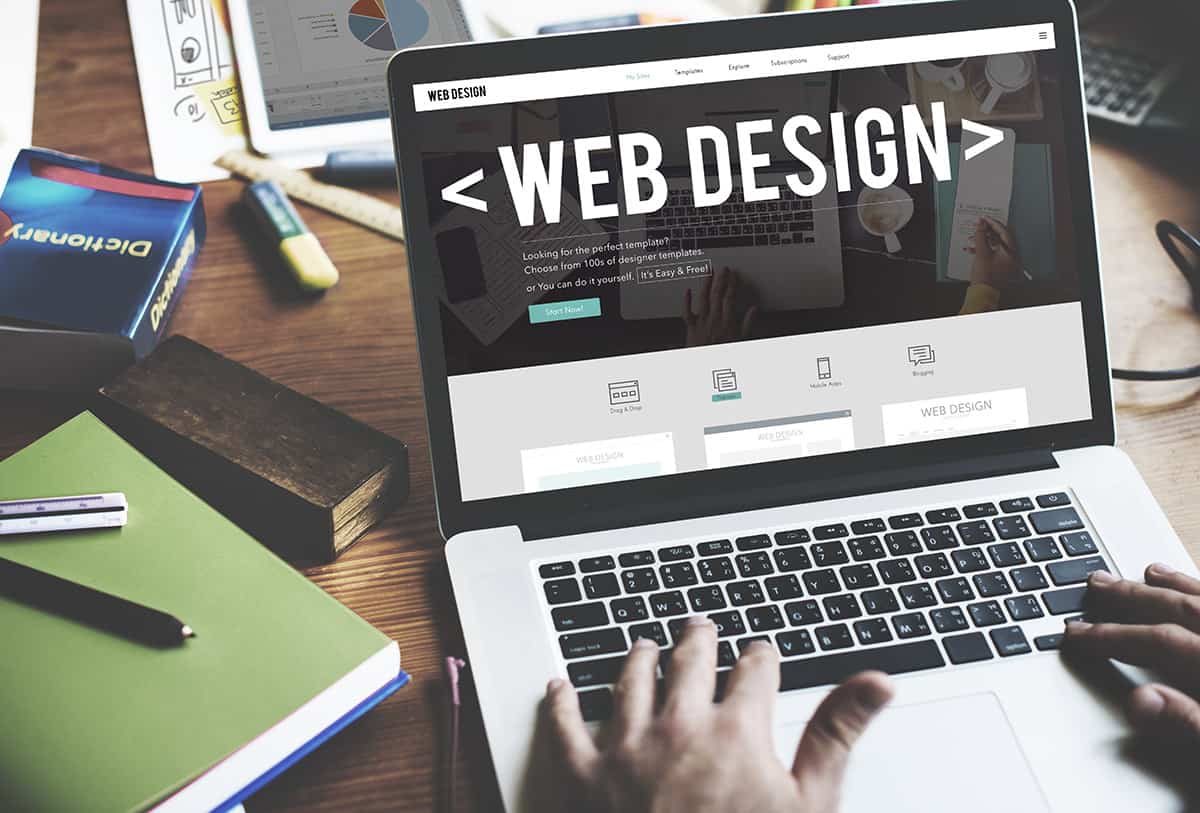
Every few years brings another “Next Big Thing” to the forefront of web design trends. This year, we’ll be seeing minimalist design merge with motion.
In 2026, the same minimalist design we’re familiar with will evolve into an evolving visual language. While minimalism continues to remove clutter and distractions from websites, the design will also have elements of movement.
These two elements will come together to create visually stunning websites that engage users.
For several years, Slinky Web Design has focused on the “why” behind their designs instead of simply creating a beautiful interface.
With the focus on “why”, the designers at Slinky have been able to create visually appealing designs while focusing on usability and user engagement.
What Will the New Minimalism Look Like?
When most people think of minimalism, they think of removing as much as possible from a website. When designing a website, this can leave a very cold feeling for visitors.
In 2026, designers will take a different approach to minimalism.
Designers will not be removing items simply to say they removed them. Instead, they will be removing the noise that detracts from the meaning of a website. All of the items on a website will have a purpose. However, it does not have to remain static.
Imagine entering a quiet room with plenty of natural light. There may be nothing in the room that is unnecessary, yet everything seems thoughtfully placed.
In the same way, when users visit a website created with minimalism and motion in mind, they will find no unnecessary elements. Each item has a purpose.
And even though the layout of the website is intentional and clean, there is still a subtle sense of movement throughout the website.
That is what the new version of minimalism will look like.
How Will We Use Movement in Our Designs?
Motion design in the past was a bit too dramatic for many users. There were far too many flash intros, spinning logos and bouncing icons. It seemed as if each website was trying to show off its ability to move.
However, users today are far more sophisticated. Users do not need to be dazzled. They want to be engaged.
Slinky Web Design’s philosophy of using animation fits in perfectly with what users want.
Slinky Web Design’s developers use animation as one would use seasoning. Enough to add flavour, but not so much that it overwhelms the dish.
Here are some examples of how Slinky Web Design’s developers are currently using animation in current projects:
- Micro-interactions: A small animation occurs when a user clicks a button or submits a form. The animation provides reassurance to the user that the action was successful.
- Scroll-triggered animations: Fade-in or slide-out animations occur as the user scrolls down the page. The animations enhance the story being told through the content.
- Responsive transitions: Transitions between pages that automatically adjust to the size of the device the user is viewing the content on.
None of the above forms of animation is new. What is changing is how carefully designers are considering when and how to use motion in their designs.
The Significance of the Merger
It could be imagined that the concepts of minimalism and motion are mutually exclusive, whereas, as a matter of fact, they are not only different but also poles apart. One of them says, “Less is More,” while the other shouts, “Make it Move.”
How, then, do they work together? Because today the public demands both clarity and personality.
Fast-loading sites are a demand (thanks to Google), and yet the user demands an experience that is alive and pulsating. Minimalism gives them clarity of thought, and motion gives them warmth.
This merger is not merely for aesthetics; it has very definite values in respect to performance and to business:
- More Speed in Loading. Clean-cut layouts mean lightweight code. This means better SEO and greater conversion.
- Increased Engagement. Motion helps to keep visitors longer on site, thus reducing the bounce.
- Better Branding. Smooth and conscious flow gives an emotional link, which is lacking in static layouts.
Slinky carefully studies the balance of these things. Our web design and development teams cooperate early, not as independent activities, but as an integral part of a single operation.
This is art, and it will readily be seen in the emotions inspired by the sites we create, which are not only intuitive but excitingly memorable.
Real Design Has Emotion
It seems rather a curious myth that has built itself up around minimalism, namely, that it should have no personality. It is simply lines, letters, and white space. But it is in the detail that emotion resides.
Our team constantly discusses the notion of “design empathy,” which is not some empty term but a working philosophy in the matter of design.
We approach any given site in the eyes of the user: what does this certain colour suggest? Is the transition too slow? Am I demanding too much attention too quickly?
Sometimes we will purposely introduce a slight imperfection, that is to say, say a hand-drawn graphic, or an element that’s off centre, etc., but this is what humanity loves, not perfection.
And this is the real virtue of this new design trend. It is not sterile minimalism, nor is it a bolder and dominant movement. It is a humane rhythm, a soft choreography of minimalism and motion, which conveys an instinctive feeling.
Designed for Attention
We all know that the attention span is getting shorter, but this does not mean that a person is impatient, rather selective. And in 2026, users make up their mind in about two seconds, whether the website is worth their time.
The website design process should be sympathetic to this. Design for clarity first and curiosity after. What this means is:
- Quick visual hierarchy so that at once the visitor knows where to look.
- Clean Navigation with a menu that does not make it hard to locate the Contact Us button.
- Movement that supports clarification, a soft change of direction can better portray a hierarchy than a block of text could illustrate.
In the end, a website is not a brochure. It is a living part of a business. It should never confuse the visitor.
Why Minimalism and Motion Fit Together So Well
Here is a simple truth: your brain loves patterns, but it also loves to break them. That is why it is so satisfying to have a minimal design with small, significant movement. You get the support of a structure and the surprise of breaking free of it.
Designers often use the phrase, “breathing space.” The minimalist basis calms down the senses while the motion beats its heart. Only this rhythm occurs.
For instance, take a homepage hero section. Instead of having a static picture, there can be a background video being played quietly and slowly to create life without distraction.
Then there is the headline, which fades in just after the user has scrolled, the timing being carefully fitted as music. You might not see it in a conscious way. Your mind does, though.
This is no large fireworks display. It is a particular kind of sophistication and simplicity that leads to good design.
Accessibility and Motion: A Reality Check for 2026
One factor that has been of concern lately is the question of accessibility. By overdoing motion, usability is adversely affected, especially for those with vestibular problems or cognitive sensitivity.
All motion, all figures, and all parallax effects are tested and coded for user settings (that is, it “prefers less motion”). This makes it so that everyone can have the pleasure of a clean and functional experience without being distracted or confused.
This is not a matter of compliance. It is of respect. For web design, it is not only a matter of aesthetics. It is a matter of inclusivity.
SEO Factor: Minimalism Helps More Than You Think
Though web design today should not simply chase Google’s algorithm, it is important to notice how web design impacts SEO performance.
A minimalist layout naturally loads more quickly. There is no need for heavy scripts, a less cumbersome markup, and less complicated CSS.
This is again reflected in better Core Web Vitals, a ranking aspect which definitely still counts.
In Slinky’s web design projects, on-page optimisation is invariably included from the start, not tacked on afterwards. This includes image compression, schema markup, mobile responsiveness and content structure itself.
It is a type of quiet efficiency that is not assertive, one that you feel but do not see.
Slinky’s Design Philosophy
Slinky is not a template factory. Every website designed by Slinky is customised to meet your company’s needs, not just colour-match your branding.
Whether creating a small business website or an e-commerce website, each design choice is made with strategic planning in mind.
We start by asking ourselves: “What do we hope our visitor achieves from visiting this website?”
Using this information, we build:
- Wireframes that take into consideration how the visitor will move through the website (flow) and tell the brand’s story, not just how beautiful the wireframe looks.
- UX decisions based on the actual data from visitors, not assumptions.
- Motion concepts that help communicate key messages and do not detract from them.
- Testing on various platforms to ensure consistency throughout the website.
Slinky creates websites that feel and appear modern, while having a timeless quality to them, which is exactly the intent behind this emerging style of minimal-motion design.
Designing with White Space
There is no design principle that defines 2026 better than restraint. We can now stop filling every inch of our screens with content. In fact, empty space can speak louder than content.
Slinky’s designers understand when to stop designing. Their designers are able to leave white space in layouts, allowing visitors time to think, reflect, and enjoy the experience. This is similar to good conversation – the pauses are often as important as the words spoken.
In today’s digital world, where there is so much clutter and distractions, these moments of white space are precious.
Looking Forward – Minimalism and Motion Will Not Disappear
All trends eventually pass away; however, the merging of minimalism and motion seems more like a new design language than a trend.
Visitors are looking for calm online experiences that still provide a sense of life. Companies are looking for modern-looking websites that load quickly.
Designers are looking to create online spaces that provide a human connection.
This is the direction web design is headed in 2026. Less about being flashy and more about depth. Less about decorations and more about substance.
Slinky’s design philosophy shows that you do not have to give up on simplicity to make a lasting impression. At times, the most effective design is the one that does not scream for attention; it simply earns it.
Closing Thoughts
Web design in 2026 is quietly confident. It will move, but not rush. It will be minimalistic, but alive.